
Quantcast

CatholicPhilly.com: News from the Archdiocese of Philadelphia, Powered by The Catholic Standard & Times and Phaith magazine

Catholic Philly.com
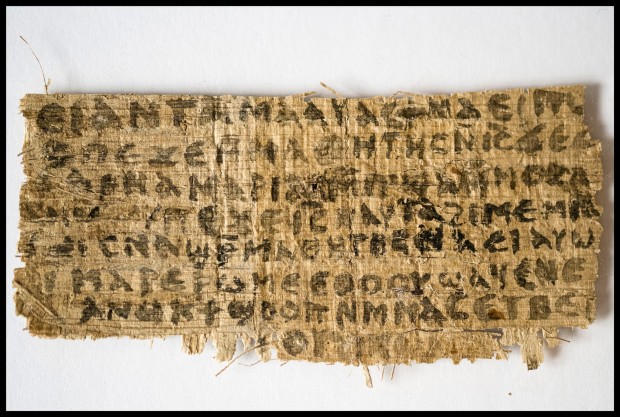
A previously unknown scrap of ancient papyrus written in ancient Coptic is pictured in this undated handout photo. The fourth-century text provides evidence that some early followers of Jesus proposed that he was married, a perception disputed by scholars. (CNS photo/Karen L. King, courtesy Harvard University)

A previously unknown scrap of ancient papyrus written in ancient Coptic is pictured in this undated handout photo. The fourth-century text provides evidence that some early followers of Jesus proposed that he was married, a perception disputed by scholars. (CNS photo/Karen L. King, courtesy Harvard University)

Posted in World Catholic News, on September 21st, 2012

Papyrus fragment with reference to Jesus’ ‘wife’ stirs debate

By Carol Glatz
Catholic News Service

ROME (CNS) — Scholars are unlikely to agree anytime soon on the authenticity of a newly published text containing a reference to Jesus’ “wife.”

But the tiny papyrus fragment, purportedly dating to the fourth century A.D., has already stirred interest in the early church’s attitudes toward marriage, sex and the role of women.

The fragment of papyrus with eight lines of Egyptian Coptic writing is the “only extant ancient text which explicitly portrays Jesus as referring to a wife,” wrote Karen L. King, historian of Christianity at Harvard Divinity School, in an academic paper she delivered Sept. 18 at an international Coptic studies conference in Rome.
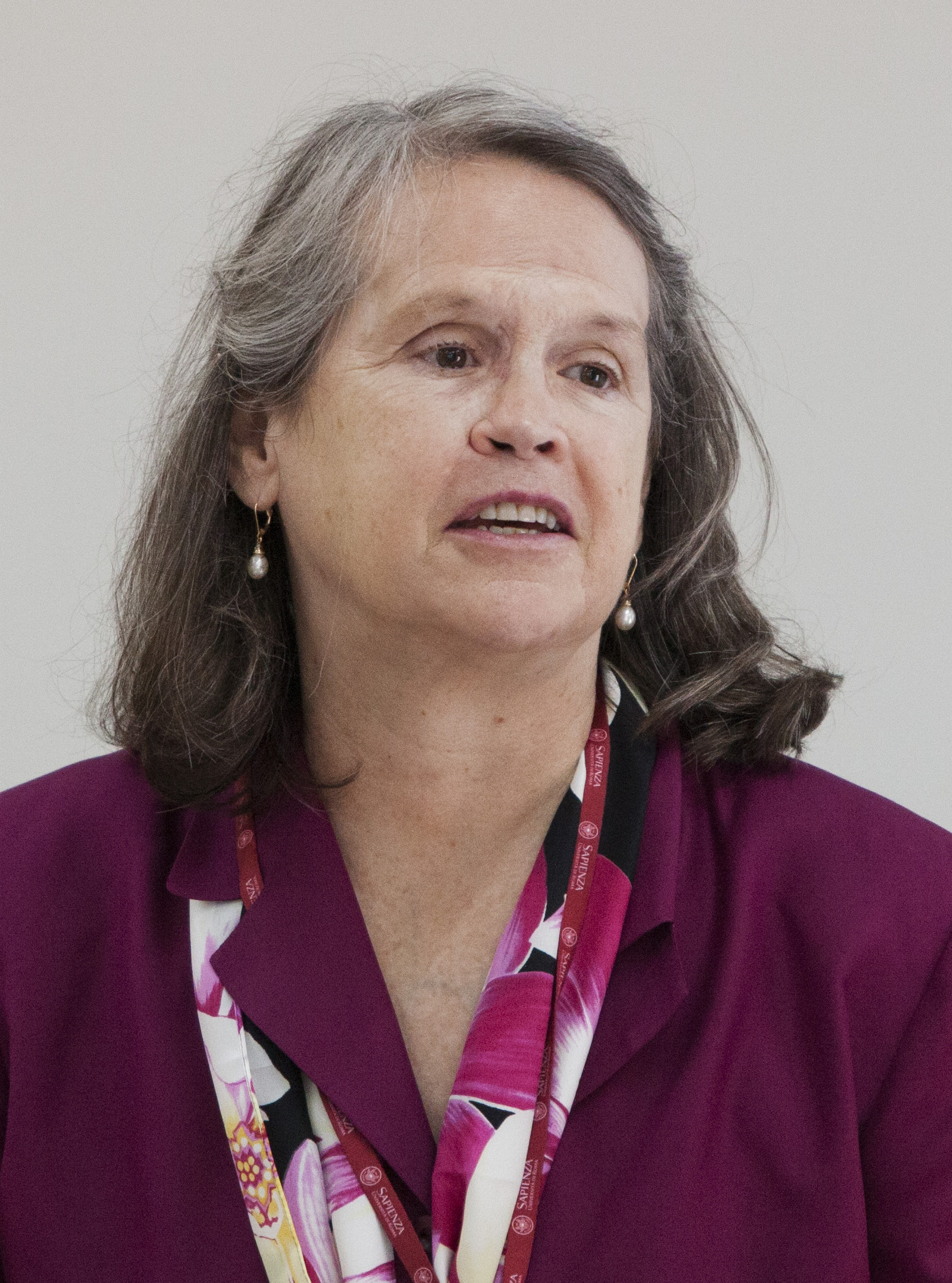
Karen L. King, a historian at Harvard Divinity School, speaks at the Tenth International Congress of Coptic Studies in Rome Sept. 19. (CNS photo/Paul Haring)

“It does not, however, provide evidence that the historical Jesus was married,” she wrote, “given the late date of the fragment and the probable date of original composition,” at the end of the second century.

The best source of evidence giving an account of Jesus’ life and ministry is still the Gospels in the New Testament, King told reporters the next day, “and they are silent about his marital status.”

But she said the fragment is “direct evidence” that early Christians started debating in the second century whether Jesus could have been married or not.

Father Juan Chapa, a New Testament scholar at the University of Navarra in Spain, told Catholic News Service that the “Gospels don’t mention marriage, not because they wanted to hide something, but because it was clear that Jesus did not get married, and it’s consistent in the church’s tradition.”

He also noted that the gnostic gospel genre to which the fragment evidently belongs is one of stories about Jesus that mainly take place after the resurrection, using language that is heavily allegorical. Thus, he said, the fragment’s relevant words –”Jesus said to them, ‘My wife’” — were likely not meant as a literal assertion about the life of the historical Jesus.

King said that the significance of the fragment lies in the light it might shed on debates in the early church over the necessity of celibacy to living a holy life.

According to Michael Peppard, a professor of theology and Coptic language at Fordham University, a belief in asceticism saw rapid development in the second to fourth centuries, especially in Egypt where Christian monasticism was born.

Some bishops at the time “were saying that the highest ideal was asceticism,” which included renouncing “all the trappings and worries of material life,” including marriage.

But Peppard said other bishops in the same period “were figuring out how to give everyone their space,” and letting it be known it was all right for Christians to live in the world.

The new text published by King may be a sign of early Christians “pushing back” against asceticism and moving closer to mainstream Jewish attitudes “of blessing sex and procreation,” Peppard said.

Catholic teaching, Father Chapa said, holds that “Jesus’ celibacy, by differentiating him from other rabbis, underlines his unique mission to fulfill the kingdom of God, and shows how he embodied the love of God” by renouncing conjugal love.

King said the reference to Jesus’ wife could just be a symbol of the church, akin to the Gospel allegory of Jesus as bridegroom of the church.

“What if what’s missing is saying, ‘My wife is the church?’” King said.

But both Peppard and King argue that the word does refer to a real person, since the line just below it includes the words: “…she will be able to be my disciple…”

The “wife” in question could be a “spiritual wife,” Peppard said. Other texts from the same period uphold “the image of an unconsummated spiritual marriage where the best kind of husband and wife live celibately,” he said.

King acknowledged that there would be continued debate over the authenticity of the fragment, whose paper trail goes back only to the 1980s.

“I would say it’s a forgery,” Alin Suciu, a papyrologist at the University of Hamburg who was attending the conference with King, told the Associated Press. “The script doesn’t look authentic” compared to other fourth-century Coptic papyri.

But Roger Bagnall, a papyrologist and director of the Institute for the Study of the Ancient World at New York University, studied the handwriting, the grammar and how the ink was absorbed by the plant fibers, and concluded it was likely to date from the period between 350 and 400 A.D.

“We can’t ever know or be 100 percent sure if it’s authentic or a forgery,” Peppard said.

King said any properly accredited scholar in the world is welcome to study the papyrus, and that criticism of her findings is part and parcel of any historical study.

“We want to do the best job we can with new historical data,” she said.

Father Chapa called King’s discovery “exciting,” and nothing for believing Catholics to fear.”Anything that helps us understand our past, to understand the history of the church and how the church defined herself in history,” he said, “is very valuable and positive.”

***

Contributing to this story was Francis X. Rocca in Rome.


One Response

  1. Given the time it would have been unusual for Jesus not to be married. Keep in mind that Saint Peter was married and that mandatory celebacy in the Latin Rite was not put into effect until around 1,000 years later.

    By: Robert on September 24, 2012 at 11:38 am

Post a Comment

Anti-Spam Quiz:

New Google Ad – First Tower

New Google Ad – Second Tower

New Google Ad – Fourth Tower

Photo Gallery

Photo Gallery

  • StJoeIMG_0014
  • Fr. Brian Kean and Msgr. Joseph McLoone, pastor, sprinkle the people of the church as a sign of repentance and as a reminder of their baptism.Fr. Brian Kean and Msgr. Joseph McLoone, pastor, sprinkle the people of the church as a sign of repentance and as a reminder of their baptism.
  • Msgr. Joseph McLoone, pastor, sprinkles the people and church as a sign of repentance and as a reminder of their baptism and to purify the walls of the new church.Msgr. Joseph McLoone, pastor, sprinkles the people and church as a sign of repentance and as a reminder of their baptism and to purify the walls of the new church.
  • StJoeIMG_0133
  • StJoeIMG_0229
  • Archbisohp Charles Chaput places relics of Saint Anthony of Padua, Saint Elizabeth Ann Seaton, Saint John Neumann, Saint Maria Goretti, Saint Patrick, and Saint Peregrine beneath the altar which is then sealed.Archbisohp Charles Chaput places relics of Saint Anthony of Padua, Saint Elizabeth Ann Seaton, Saint John Neumann, Saint Maria Goretti, Saint Patrick, and Saint Peregrine beneath the altar which is then sealed.
  • Archbishop Charles Chaput anoints the altar with sacred chrism which makes the altar a symbol of Christ.Archbishop Charles Chaput anoints the altar with sacred chrism which makes the altar a symbol of Christ.
  • Incense is burned on the altar to signify that Christ's sacrifice, there perpetuated in mystery, ascends to God as an odor of sweetness and also to signify that the people's prayers rise up pleasing and acceptable, reaching the throne of God (Rev 8:3-4).Incense is burned on the altar to signify that Christ's sacrifice, there perpetuated in mystery, ascends to God as an odor of sweetness and also to signify that the people's prayers rise up pleasing and acceptable, reaching the throne of God (Rev 8:3-4).
  • The altar is covered in preparation for the fist celebration of the Eucharist in the new church.The altar is covered in preparation for the fist celebration of the Eucharist in the new church.
  • Parishiners come forward with candles for the altar which will be lit to show that Christ brightness shines out in the Church and through it in the whole human family.Parishiners come forward with candles for the altar which will be lit to show that Christ brightness shines out in the Church and through it in the whole human family.
  • The lighting of the altar is follwed by the lighting of the church which reminds us that Christ is "a light to enlighten the nations" (Luke 2:32).The lighting of the altar is follwed by the lighting of the church which reminds us that Christ is "a light to enlighten the nations" (Luke 2:32).
  • StJoeIMG_0450
  • LIturgy of the EucharistLIturgy of the Eucharist
  • The people of St. Joseph parish pray joyfully in their new church.The people of St. Joseph parish pray joyfully in their new church.
  • Archbishop Charles Chaput puts away Eucharist in the tabernacle for the first time at the new parish.Archbishop Charles Chaput puts away Eucharist in the tabernacle for the first time at the new parish.
  • Parishiners appluad for all the hard work that has gone in to creating their beautiful new church.Parishiners appluad for all the hard work that has gone in to creating their beautiful new church.
  • Knights of Columbus lead the recessional after the beautiful dedication of the new church of St. Joseph Parish in Downingtown, Chester County.Knights of Columbus lead the recessional after the beautiful dedication of the new church of St. Joseph Parish in Downingtown, Chester County.
  • StJoeIMG_9805
  • Representitves from Casaccio Yu Architects hand over the plans for the church to Archbishop Charles Chaput.Representitves from Casaccio Yu Architects hand over the plans for the church to Archbishop Charles Chaput.
  • Msgr. Joseph McLonne, pastor, along with Archbishop Charles Chaput open the doors to the new church for the people to enter.Msgr. Joseph McLonne, pastor, along with Archbishop Charles Chaput open the doors to the new church for the people to enter.
  • Parishioners fill the new church for the first time.Parishioners fill the new church for the first time.
  • Msgr. Joseph McLoone, pastor, and Fr. Brian Kean incense the church during the dedication of the new church.Msgr. Joseph McLoone, pastor, and Fr. Brian Kean incense the church during the dedication of the new church.

St. Joseph Parish in Downingtown, 2nd largest in archdiocese, dedicates new church

St. Joseph Parish in Downingtown, Chester County, dedicated its new church on Saturday, June 15 at 460 Manor Avenue, Downingtown. The celebration was the culmination of planning for future parish and enrollment that began in 2007.
The Rite of Solemn Dedication was celebrated by Archbishop Charles J. Chaput. Approximately 1,200 parishioners, priests, community officials and those involved with building the church were in attendance.

Join the Catholic Philly Community

Join the Catholic Philly Community

New Google Ad – Third Tower