

The most important week of the Catholic Church’s liturgical year is just ahead.
Holy Week, the eight days from Palm Sunday to Easter Sunday when Catholics spiritually walk alongside the week of Jesus Christ’s life that transformed the world, begins Sunday.
“Holy Week, especially the three days of Good Friday, Holy Saturday, and Easter Sunday, gives us the opportunity to celebrate the Paschal event of Jesus, His death and resurrection, in a most solemn way,” said Father Dennis Gill, the rector of the Cathedral Basilica of SS. Peter and Paul in Philadelphia. He also serves as director of the archdiocesan Office for Divine Worship.
Palm Sunday
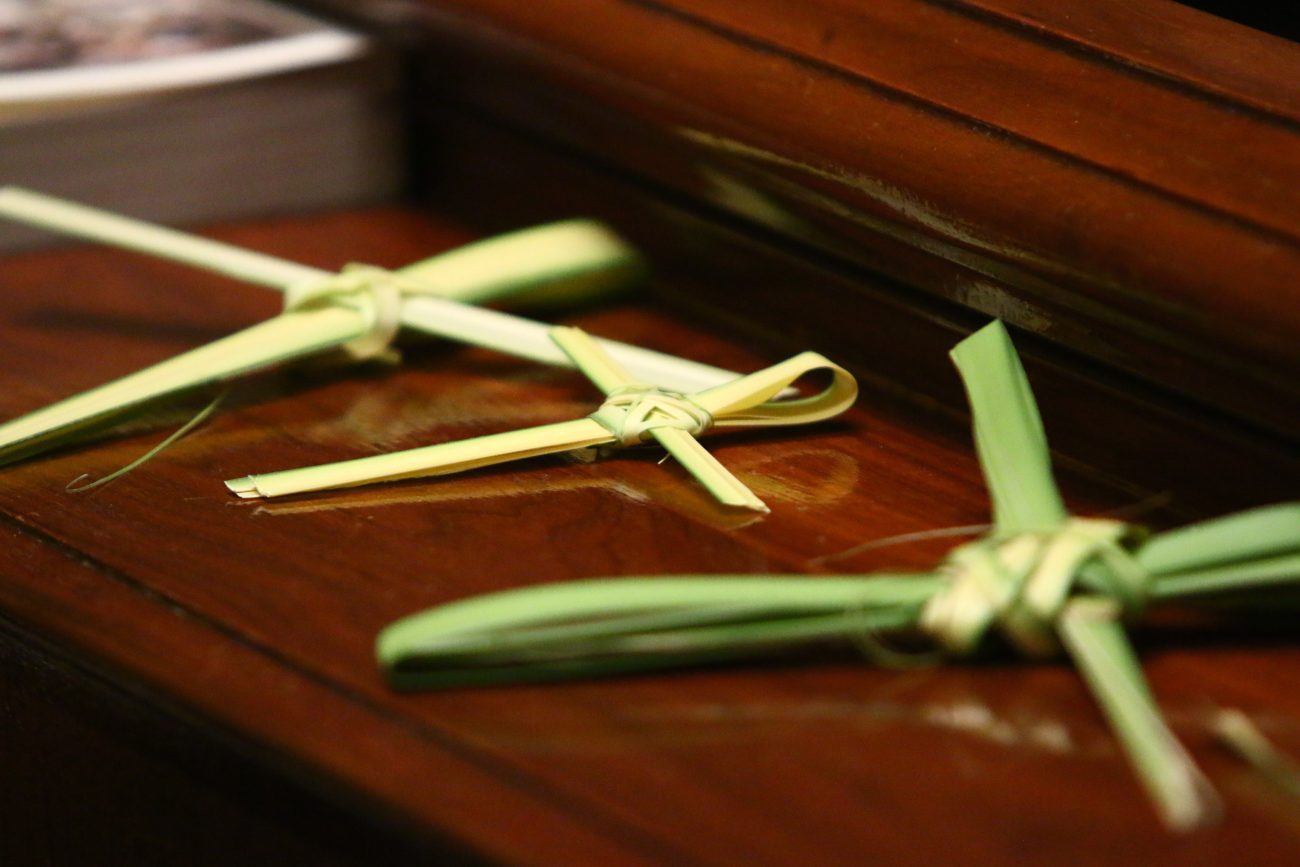
Palm Sunday acts as the Church’s entry point to Holy Week, as Catholics mark Jesus’ entry into Jerusalem to begin His passion.
“I think Palm Sunday speaks to people in a very easy way because they can imagine the event. They can imagine the Lord triumphantly entering into Jerusalem. They can identify with the people singing Hosanna. They have the palm in their own hand. They also have the additional sense of being with Jesus,” Father Gill said.
“While we commemorate His triumphant entrance into the Holy City, the centerpiece is hearing the Gospel. The Lord Jesus announces on Palm Sunday His own death, which is the salvific event for all time.”
Holy Thursday
Holy Thursday brings two major opportunities for Catholics. The first is Thursday morning’s Chrism Mass, perhaps little known to some but one with great meaning for the Catholic Church of Philadelphia.
“The Chrism Mass is about the blessing of the oil of the sick and the oil of catechumens and the consecrating of the sacred chrism. These are the oils used in the celebration of the sacraments,” Father Gill said of the 10 a.m. Mass celebrated by Archbishop Nelson Pérez and numerous priests at the Cathedral Basilica.
Then comes the start of the Sacred Triduum beginning with the evening Mass of the Lord’s Supper on Holy Thursday in most parish churches.
The Mass commemorates Christ’s institution of the holy Eucharist and includes the priest celebrant washing of 12 persons’ feet as Christ did, marking the Last Supper as Christ enters more deeply into His passion.
“What we should focus on is the praying of the Great Eucharistic Prayer,” Father Gill said. “The priest is directed to use the oldest of the eucharistic prayers that night, the Roman Canon, the First Eucharistic Prayer, where we are with the actual sacrifice of Christ, where we commemorate the institution of the two sacraments of the priesthood and the Holy Eucharist and the law of charity.
“The Mass ends in a unique way from communion with a procession to the repository, which combines both allowing for a host to be available for the next day, Good Friday, but also an opportunity for the whole church to adore our Lord.”
Good Friday
Parishes will then mark Good Friday in numerous ways at various times, but Father Gill said everything about Good Friday is the proclamation of the death of the Savior.
“Jesus is very much risen from the dead on Good Friday, but the Church wants us to really pay attention to the fact that God, who took on our humanity, went to the cross, and in His humanity, died for us,” Father Gill said. “That is the solemn, single message of Good Friday.”
Good Friday is a day of obligatory fast and abstinence in the Catholic Church, but Father Gill says the Church encourages us to extend that into a not-so-well known tradition called the Paschal Fast, extending Good Friday’s meaning to the time of the Easter Vigil.
“The Paschal Fast was spoken about at the time of the Second Vatican Council and also in the current Roman Missal,” Father Gill said. “We fast on Good Friday, but it follows through into Holy Saturday, where we are not allowing anything—food in between meals, anything else—to get in the way of our reception of Easter communion. And it highlights that communion is a principal expression of Christ risen from the dead.”
Easter Vigil
That rising hits its high point on Saturday night with the Easter Vigil.
“It is the principal celebration of the whole Church,” Father Gill said.
“It traditionally begins with the blessing of the new fire and the lighting of the Easter candle, signs of the risen Lord. Then we hear the whole story of salvation, how Christ was promised and arrives, dies, and is risen from the dead in the sacred Scriptures.
“Then we have the magnificent signs of the resurrection and the baptisms and confirmations that will take place. After the great Eucharistic Prayer and the reception of Holy Communion, the sacraments are true signs of Christ risen from the dead. It’s one huge hallelujah here at the Cathedral on Holy Saturday night.”
Easter Sunday
Easter Sunday Masses then deliver more packed churches across the region as people celebrate Christ’s resurrection on Sunday morning, beginning the Easter season which will last through Pentecost Sunday on May 24.
It all comes because of what we mark during the Triduum, the time when Lent pivots to Easter, when our world pivoted to hope because of Christ’s most loving action in sacrifice and resurrection.
“We need the Easter Triduum right now,” Father Gill said.
“We need to be grounded more fully in Christ, and we need to know that His divine life and grace is so readily available to us when we celebrate His mysteries in such a solemn and full and beautiful way.”
***
See the Holy Week schedule at the Cathedral Basilica of SS. Peter and Paul here, and find a Catholic parish near you here.
PREVIOUS: Young Adults Hope for ‘Transformative’ Summer Pilgrimage to Poland
NEXT: Youth Ministry Directors Go Mobile to Meet Parish Leaders’ Needs
Share this story