

Two men ordained priests for the Archdiocese of Philadelphia last Saturday have much in common, even though they were born in different countries.
Both Fathers Jude Opara and Michael Gokie moved away from their hometowns as they discerned their vocation and went through their priestly formation. They both majored in engineering in college, and went through their initial formation with religious communities they joined.
The duo also attended seminaries in foreign countries during the circuitous paths they took toward the priesthood.
They were ordained for the Class of 2026 by Archbishop Nelson J. Pérez on Saturday, May 16 in the Cathedral Basilica of SS. Peter and Paul in Philadelphia.
***
Father Jude U. Opara
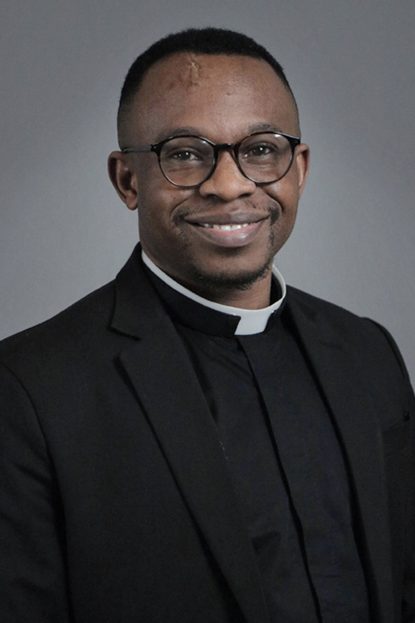
Father Jude U. Opara
When Father Jude Ugochukwu Opara, 43, moved from Nigeria to the United States, he had to adjust to the cultural differences between the two countries.
He explained that in Nigeria seminarians are called “Father” even though they haven’t been ordained.
“They give you that respect as someone who is separated from the people, and it’s not like that here,” he said.
Showing respect when addressing people who are older is a unique aspect of Nigerian culture, the priest added.
For example, instead of calling an older woman by her first name, Father Opara would call her “Auntie” as a sign of respect.
“So long as that person is above you in age, you must give respect to that person,” he said.
The priest, who has served alongside Father Eric Banecker, pastor of St. Mary Magdalen Parish in Media, and parochial vicar Father Robert Pesarchick this past year as a deacon, favors a more formal way of addressing them.
“I find it so difficult to call them Bob or Eric,” he said. “I will always say Father Eric or Father Bob, but Americans just say Eric or Jude.”
Another adjustment that Father Opara has had to make is keeping his homilies short.
“In the Church in Nigeria, you can’t just do a five-minute homily,” he explained. “They will feel like they didn’t come to church. You (preach) a minimum of 20 minutes.”
During his time at St. Mary Magdalen, he has refined his approach to preaching and reduced his word count so that his homilies are approximately five minutes.
“I’ve been able to know how many words I’m going to put in for me to actualize the time I want in my daily Masses and my weekend Masses,” he said.
Father Opara’s priestly formation began with the Somascan Fathers in Nigeria, and after moving to the United States in 2017, he attended St. Leo University in Tampa, Florida, for a year before moving Houston, Texas, where he attended the Houston Graduate School of Theology.
In 2020, he moved to the Philadelphia area where he became a student in the School of Theological Studies at St. Charles Borromeo Seminary.
What he appreciated most at St. Charles was being in the company of other seminarians and praying together with them.
“The prayers we do together in the chapel, you can’t buy that moment anywhere,” Father Opara said. “I enjoyed those moments of community prayer.”
Adapting to American food was a bit concerning to the deacon because of the effect it might have on his digestive system.
“I prayed that whatever food I’m going to eat, whatever I’m going to take into my stomach will never be harmful to me,” he said.
Father Opara found local stores that sell African food, and he was able to cook meals for himself at St. Mary Magdalen.
During his time at the parish, he asked Father Banecker to let him know if he made any mistakes.
“He is the person that if anything goes wrong, immediately after he will call my attention to it,” the young priest said. “I love that so much, so that I can correct myself.”
Serving as a deacon at St. Mary Magdalen’s has helped him feel prepared for serving as a parochial vicar, which he will do at his first assignment, St. Christopher Parish in Northeast Philadelphia.
“Father Eric and Father Bob have taught me a lot,” he said. “I’m always in the office meetings, pastoral council meetings, and financial meetings, so I know how those things run.”
Father Opara looks forward to serving as a priest in the Archdiocese of Philadelphia.
“I want to serve the people in any capacity I’m able to and give them the word of God raw,” he said.
Father Michael Gokie
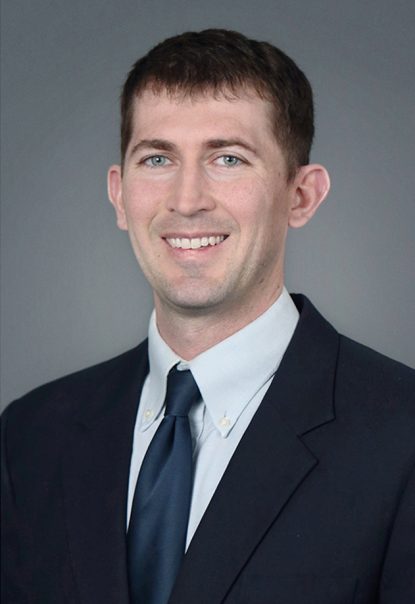
Rev. Mr. Michael Gokie
Father Michael Gokie grew up in Nebraska and was attending the University of Nebraska when he went on a life-changing mission trip to Peru the summer after his junior year.
It was during that trip he felt God “tugging on his heart” and that he was being called to the priesthood.
Responding to God’s call, he decided to join the Sodality of Christian Life and begin his initial formation in Peru where he had met brothers from the community during the mission trip.
Father Gokie’s training for the priesthood began under challenging circumstances. The language barrier was a major hurdle, and he needed to learn Spanish before beginning his formation.
“I spent six months in Lima getting my bearings and learning Spanish before going through three years of intensive formation,” he explained.
He acknowledged that his time in Peru was a particularly challenging experience for him.
“I remember leaving home, and I had no idea when I was coming back,” Father Gokie said. “It was really difficult.”
During this uncertain time, he relied on his faith and “trusted that God had a plan” for his life.
“I suffered a lot, especially the first year when I was getting to know things,” he added.
Despite the difficulties the deacon faced during formation, he described it as “amazing,” and said that he learned a lot while in Peru.
“I have a lot of beautiful memories, but at the same time, it was probably some of the hardest years of my life,” Father Gokie said. “I met so many incredible friends. Peruvian culture is fascinating, and I love the people there so much.”
After finishing his formation in 2014, he began serving as campus minister at the Newman Center at the University of Pennsylvania and Drexel University in Philadelphia. The following year, Father Gokie, now 38, applied to St. Charles Borromeo Seminary where he completed three years of philosophy coursework and four years in the theology division.
An unusual part of his experience going to St. Charles was that he attended classes in the morning and then returned to his campus minister job at the Newman Center.
He lived at St. Agatha-St. James Parish in the University City neighborhood of Philadelphia while he was in the seminary.
“I absolutely loved St. Charles, and I loved the professors,” Father Gokie said. “The people in my class were so much fun. I remember playing in the football games with them and doing some other sports with them.”
If he had free time between classes, he would walk around the building looking for places to study.
“I don’t know if they wanted me to do it, but the building was fascinating to me,” he said.
One of his favorites places to study was in an old auditorium.
“That was my space,” he said. “Nobody was in there during the day, and it was like the whole auditorium was my room to study.”
He was ordained a transitional deacon on Jan. 11, 2026, and has been serving at St. Agatha-St. James Parish with Father Remigio Morales, pastor, and Father Carlos Keen, parochial vicar.
His diaconate experience went smoothly given his long affiliation with the parish and the priests assigned there. His service will continue there, and at nearby St. Francis de Sales Parish, in his first assignment as parochial vicar.
“I’ve been living with Father Morales for eight years and Father Carlos for 12 years now,” Father Gokie said. “I’ve been helping with the liturgy the whole time, and I know how to do the Easter Triduum like the back of my hand.
“I’ve been basically shadowing them for seven to 12 years. That’s how I really learned the most (about) what it means to be a priest.”
While Father Gokie describes his path to the priesthood as unconventional, it’s also been a journey of trusting God.
“There were a lot of really hard times, a lot of uncertainty and doubt,” he said. “God has done so many things in my life to confirm my vocation. In the end, I just felt God calling me to trust him over and over again.”
PREVIOUS: Archbishop Pérez Announces New Clergy Assignments Starting July 1
NEXT: New Pact Eases Path to College for Archdiocesan Students
Share this story