

Father Remigio Morales, a native of Peru and lifelong fan of soccer – or football, as it’s known throughout the world – knows that God is a God of surprises.
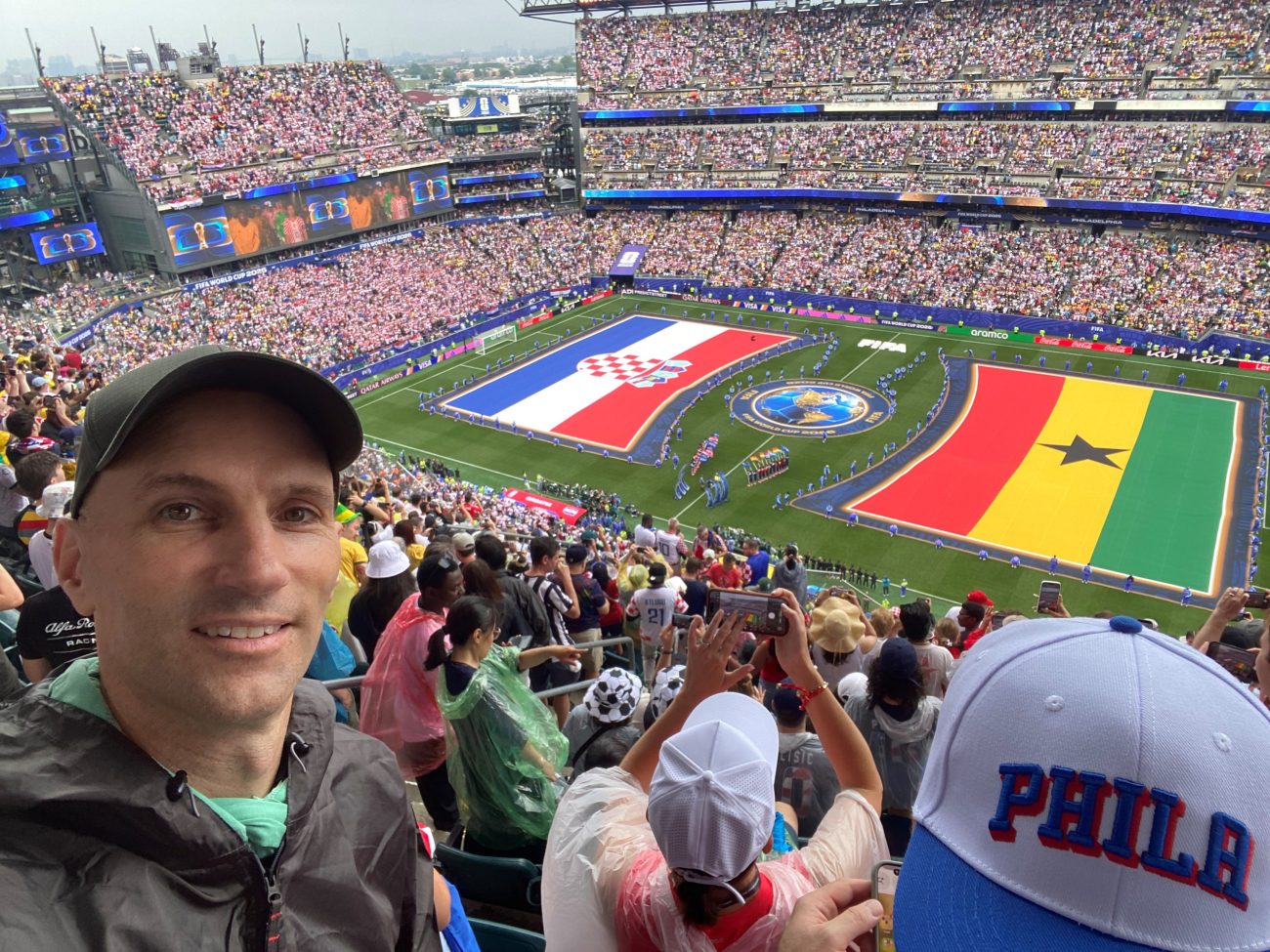
The priest in ministry at St. Agatha-St. James Parish in West Philadelphia and at the Penn-Drexel Newman Center in University City, received a unique surprise this summer when he unexpectedly scored tickets to the hugely popular World Cup soccer tournament held in Philadelphia.
“An alumni from Drexel surprised me,” said Father Morales, who attended the match between Croatia and Ghana June 27 at Philadelphia Stadium. “He told me a month before, ‘Block (that) Saturday. You need to block it because I’m going to surprise you.’”
He had been watching the World Cup matches incessantly when not serving in his ministry, so the surprise tickets capped his enjoyment of what has been called “the beautiful game.”
“I love the game,” he said. “Why I love it so much? My experience in it, because it was something universal.”
He witnessed fans from Africa and Eastern Europe melding with Philadelphians and other aficionados enjoying a game that he believes reflects the universality of the Catholic Church.
“There was an atmosphere of so much joy, family, a lot of parents with little children. Everything was very healthy, positive,” he said.
Without a doubt, Father Morales’ love of the game comes from his childhood in a soccer-mad nation, but he also sees God’s presence and human solidarity in the game.
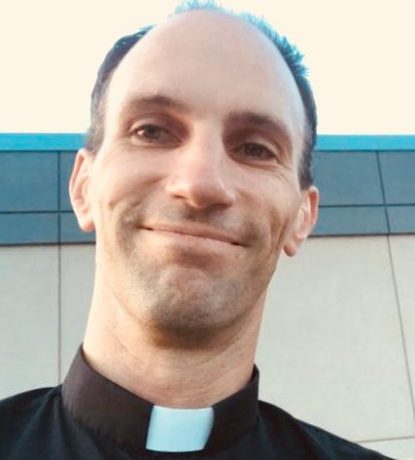
Father Remigio Morales
“This kind of brotherhood, healthy brotherhood that I was experiencing had a beautiful symbolism to what we experience in the Mass (and) in the Church which is universal,” he said.
His recounting of this edition of the 23rd men’s World Cup doesn’t dive as much into the on-field exploits of the tournament’s leading scorer, Kylian Mbappé of France, or the man whom many acclaim as the sport’s all-time greatest player, Lionel Messi.
Father Morales finds himself responding even more to the great athletes’ and their coaches’ expressions of faith, such as Messi regularly making the sign of the cross.
“What is Messi doing after every goal? He always points upwards, and he always makes the sign of the cross after scoring a goal,” Father Morales said. “He’s the most seen person and followed person in the whole world. He’s always doing it. So many kids are watching that. Whoever is not Catholic or Christian is contemplating that, and they’re immediately asking themselves, what does that mean?”
Messi is not alone in showcasing his faith with the sign of the cross. Countless players did the same throughout the 39-day tournament. Even Mauricio Pochettino, the Argentine head coach of Team USA, continually shared the sign of the cross before the beginning of each match.
“I see these soccer players from all different countries, all different nationalities,” Father Morales said. “On almost every team, the great majority of them, whenever a player is entering into a game or before the game starts, or one is replacing another, a substitute is entering to the field, they always make the sign of the cross. That’s Catholic gesture.”
Countless other signs of Catholic faith happened as well during the tournament.
Argentina teammate Lautaro Martínez wore a card of the patron saint of his homeland, Our Lady of Lujan, shortly after Argentina defeated Egypt in a round of 16 knockout match on July 7. Team USA striker Folarin Balogun wore a rosary after defeating Bosnia and Herzegovina in the tournament’s Round of 32. Spanish manager Luis de la Fuente gave his own expressions of Catholic faith during press conferences days before his squad won the final on Sunday in New Jersey.
The worldwide footprint of soccer spans numerous predominantly Catholic cultures across most of the Earth’s continents. Five of the 10 countries worldwide with the greatest population of Catholics, Brazil, France, Italy, Spain and the United States, have combined for 18 of the 32 championships in men’s and women’s World Cups.
Father Morales recognizes that individuals may sometimes choose to express such faith for performative reasons, but it does not stop the grace that can flow from these moments of evangelization.
“There are different degrees of expressions and different degrees of seriousness with the faith, but it’s present,” he said. “That doesn’t mean people aren’t necessarily consistent in all the practices, in all of Catholic life, but there are expressions all over the place.”
The Catholic faith has even brought rise to many soccer clubs. Marist priests started Celtic F.C. in Glasgow, Scotland to help raise funds to feed poor Irish immigrants to Scotland. Father Morales cited a pair of teams in his homeland of Peru that have connections to the Virgin Mary.
“Alianza Lima in Peru identify immediately with the devotion to Our Lord of the Miracles,” he said. “Universitario, which is my soccer team, is identified with Our Lady of Mount Carmel because of the colors of the team and the colors of the devotion.”
Father Morales’ memories of the second World Cup ever held in the United States will by far include the surprise of his first-ever chance to see the greatest single-sport tournament on Earth, but he remembers even more how the sport can proclaim God’s presence with billions watching.
“I know it’s all around, and I love it,” he said. “In moments of stress, in moments of tension, in moments of a lot of expectation, a lot of pressure, you’re representing your whole country. Immediately, you look up to heaven, and there’s nothing more beautiful.”
PREVIOUS: Missionary Hub in Chester Offering Workshops to Share, Teach the Faith
NEXT: Molded in Philly, New Black Catholic CEO Riding ‘Wave of New Energy’
Share this story