

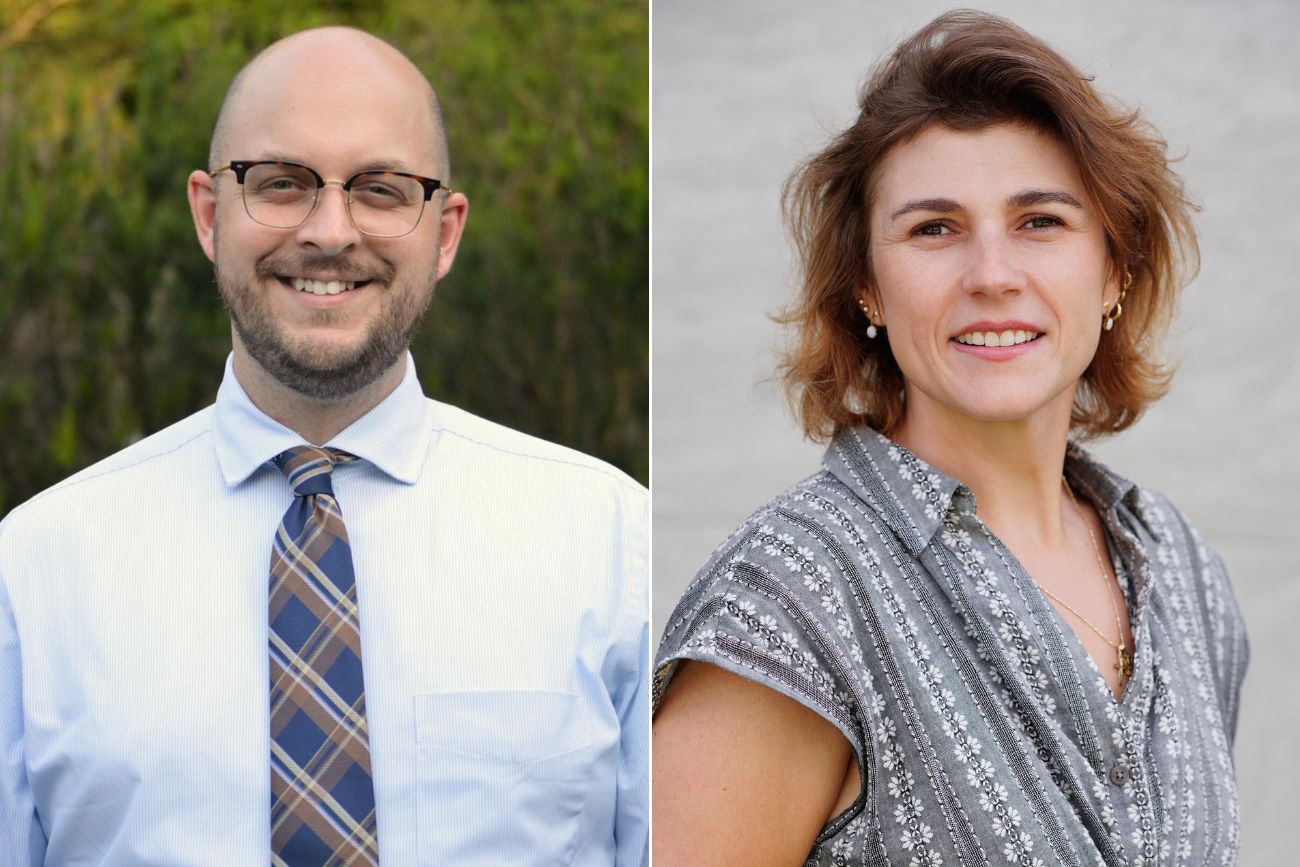
A pair of Philadelphia Catholics will be playing key roles advising bishops throughout the United States on major issues facing the Church in America.
Dr. Daniel Drain, director of the Archdiocese of Philadelphia’s Office for Life and Family and a theology professor at St. Charles Borromeo Seminary, has been named the chair of the United States Conference of Catholic Bishops’ (USCCB) Advisory Council for the Administrative Committee (ACAC).
That committee, which typically meets around March and September every year, acts as a central hub for USCCB leadership. It includes USCCB officers including its president, Oklahoma City Archbishop Paul Coakley, the chairs of each standing USCCB committee, and representatives from each region of the country.
“They act as really the board of governors for the whole USCCB,” Drain explained.
Sofia Zacharczuk, chief of staff of the Ukrainian Catholic Archeparchy of Philadelphia which is led by Metropolitan Archbishop Borys Gudziak, has been chosen as the council’s secretary.
“Two millennials from Philadelphia all of a sudden were asked to take on leadership roles for the national Advisory Council. I don’t know what the Holy Spirit is doing there, but it was a pretty decisive move,” Drain said.
Drain will first serve the council as chair-elect for 2027, chair for 2028 and past chair in 2029.
Zacharczuk’s term on the council also lasts three years, and she helps represent Eastern Catholic churches on the advisory council.
“I’m impressed … that the bishops were so thoughtful to think of putting together such a council where we are representative of all different Catholics across the United States,” she said. “They want to hear what we have to say.”
The council was formed in 1968 mainly as a body of devoted Catholics including lay people who can assist the Administrative Committee with what Drain calls a faithful synodal approach to listening for the work of governance of the conference.
“The conference president and the bishops themselves govern the conference, but they have a first round of consultation for most things they’re thinking about doing, and that’s the focus of the advisory council,” Drain said.
“We are very concretely consulting on the process of the governance of the bishops’ conference, and so that requires a proper process for who hears what and when.”
Drain joined the council in 2025. He will chair each Advisory Council meeting, plan the work of consultation, and report to the Administrative Committee. A theologian by trade, Drain believes he may be the youngest person ever to lead the council.
“I think it’s been the more typical modus operandi of the advisory council to have the chair be someone who typically chairs meetings, who might serve on many nonprofit boards. There have been many diocesan attorneys who’ve served there,” he said. “It is at the very least interesting and humbling to me to be a young father, a millennial father, a theologian serving in this role.”
Zacharczuk will take key notes from the council’s conversations. She sees her role as a progression from the presence that Archbishop Gudziak has had at the USCCB, one which expands the presence of Eastern Catholic churches who are in full communion with the pope.
“Archbishop Gudziak himself was chair of the Domestic and Policy and Human Development Subcommittee, and now he is chair of the (Committee on) International Justice and Peace,” she said. “The fact that a member of the Ukrainian Catholic Church holds a position in one of the committees (is) very profound.”
Drain recognizes how the Catholic Church responds to an evolving culture while remaining true to her teachings and the call of Christ, and how the Advisory Council is the first line of consultation for bishops serving tens of millions of Catholics across an ever-changing American society.
“I really get to shape the conversation,” he said.
“It’s (to) facilitate a conversation, which will give us an honest picture of how these things come across to lay faithful (and) to religious, to people from Honolulu (to) border states. In that sense, it’s about facilitating conversation in the group.
“How we have those conversations and the kinds of questions we ask, that’s where I’ll have, maybe uniquely, a little bit more authority to shape what’s important for a representative body to talk about.”
Zacharczuk emphasizes that she and Drain offer a rare opportunity for faithful Catholics to connect with them and give feedback that can shape the conversations leading bishops to action in fostering the faith across the U.S.
“I would just encourage everybody that if you have something to say, if you have thoughts, if you have opinions, make them known,” she said.
“Our bishops want to hear (you). Our bishops want to serve their people.”
PREVIOUS: St. Joe’s Prep Students Celebrate 175 Years at Site of First School Mass
NEXT: La Salle University, Archdiocesan High Schools Announce Partnership
Share this story