

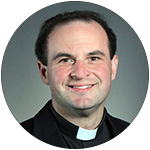
Father Eric J. Banecker
One of the most common sins I’ve heard in over eight years as a priest is failure to be patient. Of course, I’ve heard it first of all from my own mouth, when I go to confession. But I hear it all the time: impatience with a spouse, children, siblings, parents, coworkers, friends, in-laws, even impatience with God and God’s plan for my life or that of others.
Many married couples choose 1 Corinthians 13 as the second reading at their wedding. I often remind them that “love is patient” is the first one on St. Paul’s list for a reason, because it’s hard. St. Augustine tells us that patience is the “willingness to endure evil without being filled with sorrow.”
It means bearing with my own faults, the faults of others, and even confusing events the Lord permits to take place with serenity and even joy.
A Christian filled with supernatural hope is able to see beyond the horizon of the present moment. Such a person can wait, even amid great suffering, and without knowing exactly how it will turn out. Think of Walter Ciszek, the Jesuit priest who spent decades as a Russian prisoner, or St. Monica, who begged God for many years that her son Augustine might become a Christian.
In the Gospel parables for last Sunday, Jesus Christ, who perfectly reveals the Father and sends forth the Holy Spirit, gives us a profound insight into the heart of God. The farmer in the parable waits, rather than pulling up the weeds right away, for a mustard seed buried in the earth to produce something. The cook waits for the dough to rise. She is completely powerless to make the dough do anything.
This is how it is with the Kingdom of God. Jesus is willing to wait for us. He could snatch us away in our sin, but He waits for us, giving us time for repentance.
Let’s be honest, who among us has never been a weed at some point? Yet the transforming love of Christ poured out for us on the cross makes it possible for the weeds to become wheat, and sinners to become saints. We should rejoice in the Lord’s patience and mercy and learn to imitate Him.
St. Francis de Sales writes that our first response to the sins of others should be pity, not anger. Instead of complaining about others or losing our peace, we should respond with the charity and compassion of Christ Himself whose Sacred Heart burns with love for sinners.
We should bear the sins of others as if they were our own and wait patiently as the work of grace takes effect in our own lives and in the lives of others.
***
Father Eric J. Banecker is Vicar General and Moderator of the Curia for the Archdiocese of Philadelphia.
PREVIOUS: In a Mixed Up World, Keep Focus on God’s Kingdom, Communion of Church
NEXT: When Finding Life’s Treasures, the Wise Give Thanks to God as King
Share this story