

The 41st International Eucharistic Congress held in Philadelphia in 1976 was not without some controversy. The main issue was the cost of the congress, especially in light of the stagflation of the 1970s.
Organizers constantly tried to reduce expenses. This was most noted in the altar for JFK Stadium. The design for congress events at the city’s largest stadium was selected in a nationwide contest. The plan called for a large altar over the north-end bleachers that would hold 500 priests and featured a ramp connecting it to the Spectrum. The design would allow for large overflow areas in the parking lot, bringing total capacity to between 300,000 and 500,000. The judging criteria, however, did not consider costs so there was an outcry when the $4 million budget was revealed. Despite working with the firm to lower costs, eventually a new architectural firm was brought in to scale down the project.
The new altar was paid for by the Knights of Columbus and cost about $100,000. The platform was still built over the north bleachers but now held approximately 50 people.
Other cost concerns centered on the purchasing of new vestments and ciboria. Upset Catholics wrote to the IEC committee complaining that purchasing new items was wasteful as there would be many nearby parishes that could loan them to the congress. But it was deemed difficult logistically to track and return the items to the parishes.
To ease the criticism, the Catholic Church Extension Society offered to contribute $10,000 to the cost of the vestments as long as they could be distributed by the society to its missionary priests after the congress. Also following the congress, many of the ciboria were sold to recover that cost.
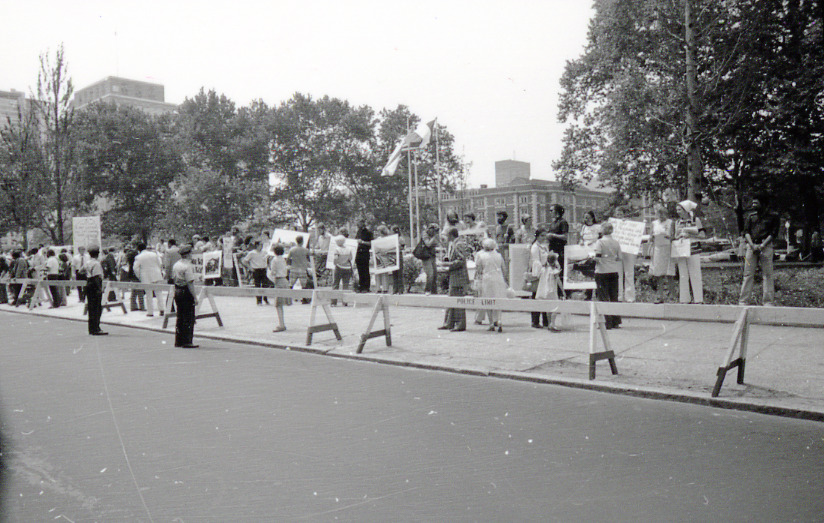
The only controversy that arose over the programming of the congress was over the scheduling of one of the Masses. A Mass for the military was held on August 6, which was the 31st anniversary of the dropping of the atomic bomb on Hiroshima.
This caused some outcry from pacifists and a silent vigil was planned outside the Cathedral Basilica of SS. Peter and Paul where the Mass for the military was held. Dorothy Day even addressed the issue during her speech the same day, saying, “No one in charge of the Eucharistic Congress had remembered what August 6th means in the minds of all who are dedicated to peace … we will regard that military Mass, and all our Masses today, as an act of penance, begging God to forgive us.”
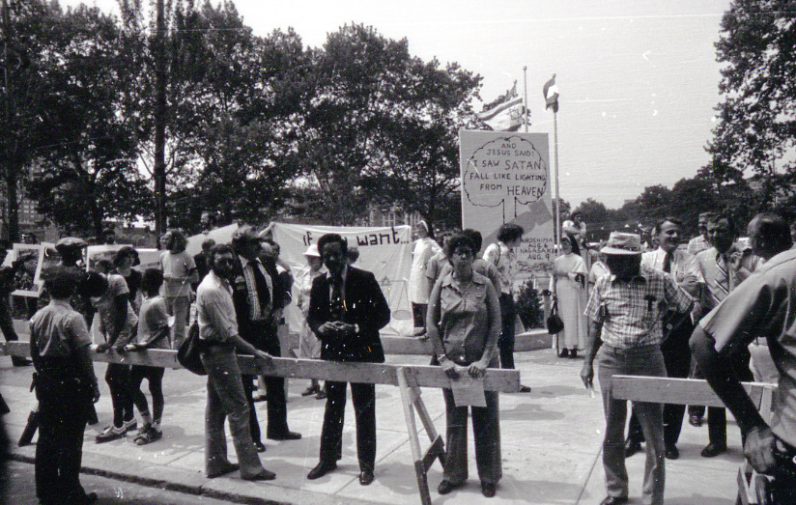
Protesters gather outside the Cathedral Basilica of SS. Peter and Paul during the 41st International Eucharistic Congress in Philadelphia on Aug. 6, 1976. The silent vigil was organized by peace activists in response to a military Mass scheduled on the anniversary of the atomic bombing of Hiroshima. (Catholic Historical Research Center of the Archdiocese of Philadelphia)
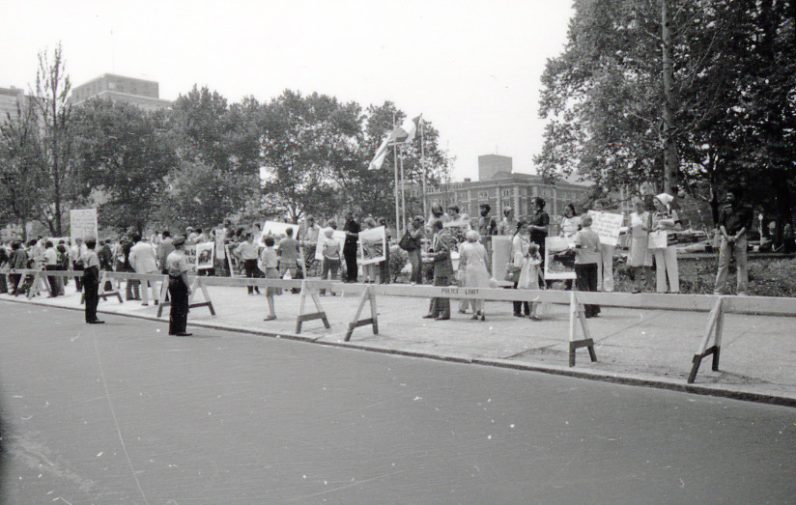
(Catholic Historical Research Center of the Archdiocese of Philadelphia)
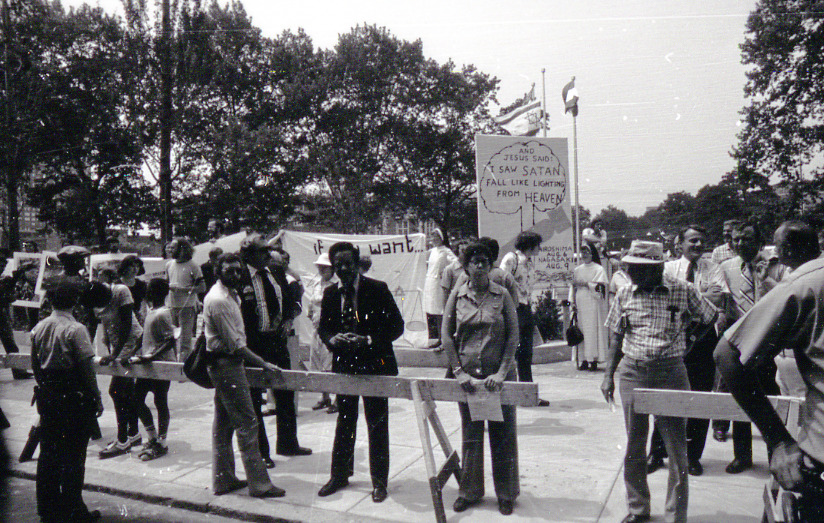
In response to the criticism, during the General Intercessions, Mass organizers added “Fill us with appropriate penance on this sorrowful anniversary of the suffering people of Hiroshima, we pray to the Lord.”
Despite some of the controversies, the IEC was considered a huge success and marked an important chapter in the Catholic Church’s history in Philadelphia.
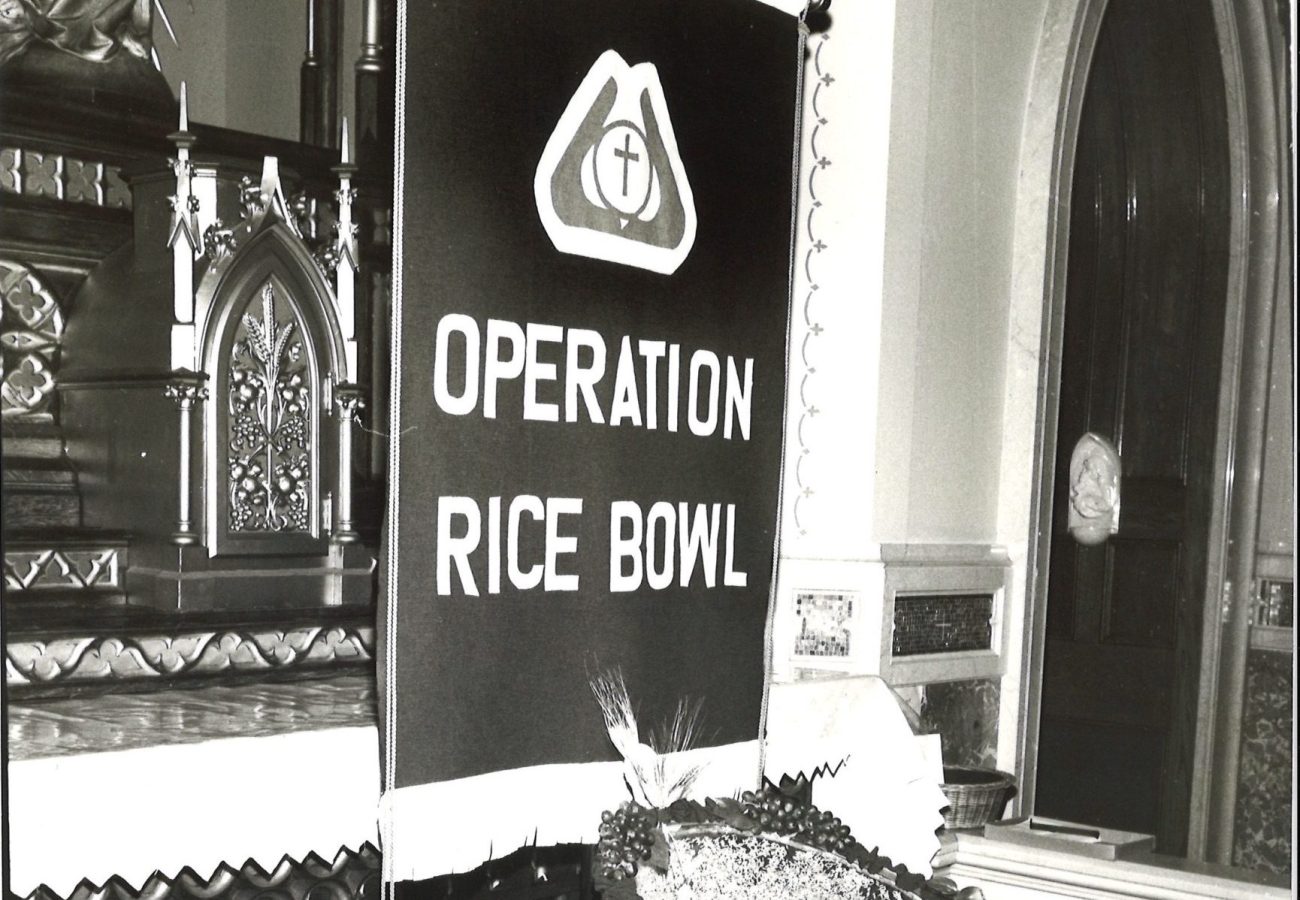
The Congress has had some lasting effects on Catholics. One of the main programs that came out of the 41st IEC was Operation Rice Bowl, which raises money every year during Lent to fight world hunger and poverty.
The program had a pilot run in the Diocese of Allentown in 1975 in which $100,000 was raised. When it was introduced leading up to the IEC, it raised over $5 million in just a few months. To date Catholic Relief Services Rice Bowl, as it is now known, has raised over $300 million.
Designed as a special program of prayer, fasting, and almsgiving, CRS Rice Bowl sought to be more than just giving money but rather a way to foster a real understanding of sacrifice and the Eucharist. Families were asked to eat a simple meal once a week during Lent, such as a bowl of potato soup with a slice of bread. The money saved on that meal was to be placed in the cardboard “rice bowl” and brought to Mass on Sunday.
Another lasting impact of the 41st IEC was a hymn writing contest. Over 200 hymns were submitted to be the official hymn of the Congress. Ultimately the hymn written by Omer Westendorf and Robert Kreutz won. Entitled “Gift of Finest Wheat,” it featured Protestant meter and rhyme structure but a Catholic understanding of the Eucharist in Scripture. The hymn is still commonly used as the Communion hymn during Mass.
The event in Philadelphia lasted for a week and was attended by more than 1.5 million people, including 44 cardinals and 417 bishops from around the world. Pilgrims came from 33 countries and nearly every diocese in the United States.
The congress ranged in size from the largest event of 350,000 attending the candlelight procession from the Cathedral Basilica to the Art Museum to small intimate art performances at historic churches throughout the city.
***
Patrick Shank is archivist of the Catholic Historical Research Center of the Archdiocese of Philadelphia and serves on the board of the American Catholic Historical Society.
PREVIOUS: St. Hubert Receives $1.5 Million Gift for Science Lab Renovations
NEXT: Global Catholic Dignitaries, Unique Arts Shined at Eucharistic Congress
Share this story