

Preserving the legacy of a Catholic institution while infusing it with new energy is a challenge that Villanova University faced as it purchased and invested more than $100 million refurbishing the former Cabrini University.
Villanova aims to meet that challenge for 900 of its resident students and others who will attend classes and enjoy other amenities on the 112-acre Villanova Cabrini Campus when classes begin there on Monday, Aug. 24.
Augustinian Father Peter M. Donohue, the university’s president, believes the project represents an opportunity to expand its footprint and marry two traditions of Catholic higher education on the Main Line.
“In 184 years, this is the first time that Villanova is expanding (in) any significant way,” said Father Donohue. “In our conversation with the administration, the faculty and staff of Cabrini University, but most especially the Missionary Sisters of the Sacred Heart, Mother Cabrini’s community, we promised that we would keep her memory and the memory of this campus alive.”
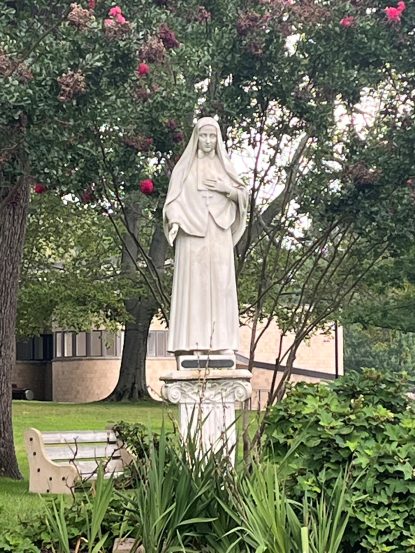
A statue of St. Frances Xavier Cabrini stands on Villanova University’s Cabrini Campus in Radnor. University leaders pledged to preserve Cabrini’s legacy as part of the transformation of the former Cabrini University campus. (Jay Sorgi)
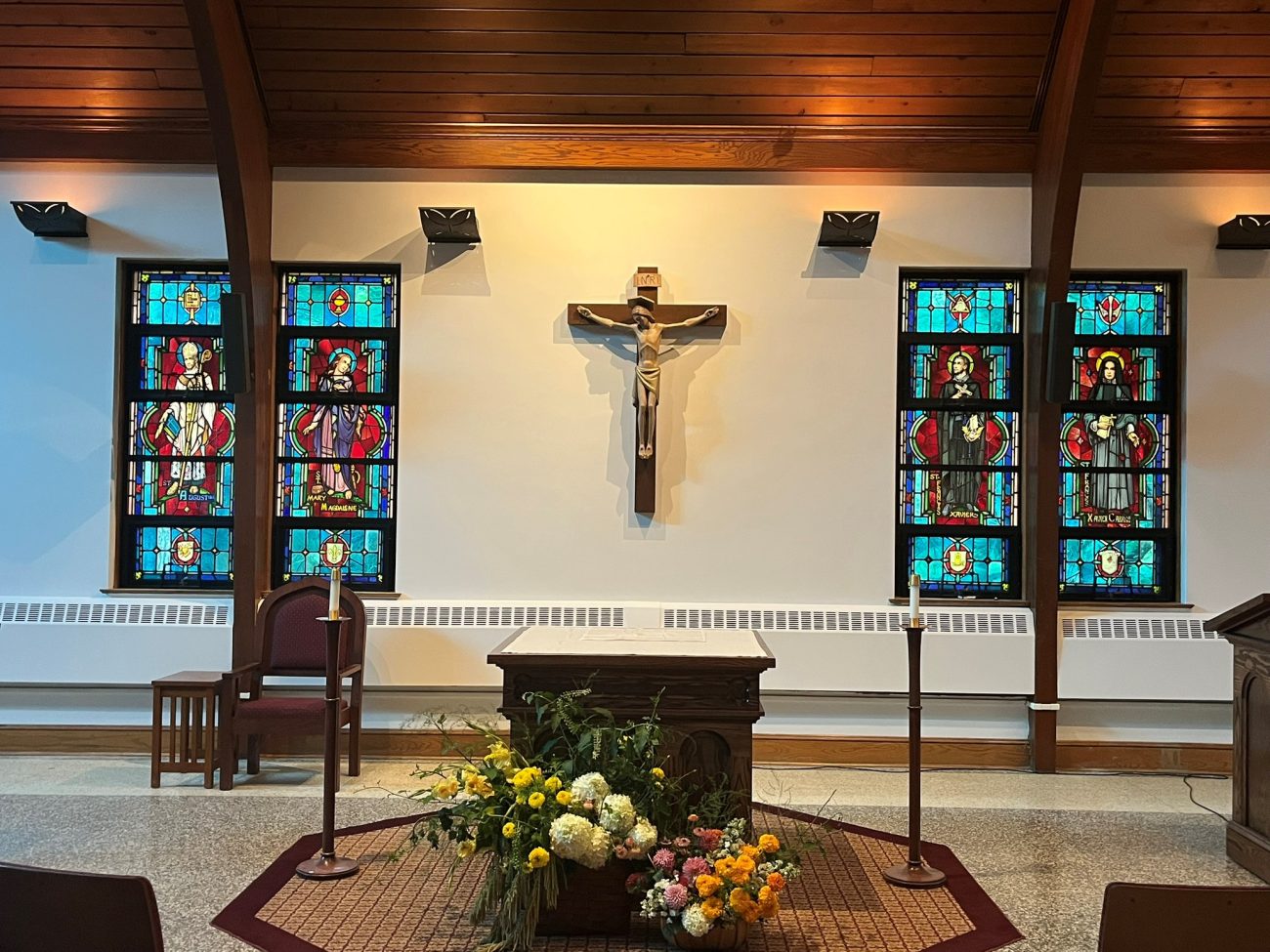
That mission includes retaining the Mother Cabrini statue and the campus’ Sacred Heart Chapel. The chapel will feed the spiritual lives of residents and other students on the campus with Masses on Sunday mornings at 11:30 a.m. and Wednesday evenings at 7 p.m.
“We were really excited when we went into the space (and) saw the stained glass window of Mother Cabrini, and then on the other side of the altar is a stained glass of St. Augustine,” said Tim Hoffman, Villanova’s Vice Provost for Finance and Administration. “We thought that was meant to be.”
The launch of the new Cabrini Campus culminates four years of transition at the Radnor property. In 2022 leaders of now-closed Cabrini University, which had served the educational needs of students for 67 years, opened a conversation with Villanova officials. A final agreement for the campus came about in November 2023, and the final class of students graduated from Cabrini in the spring of 2024 before renovations began.
“They contacted us and asked us if we would be willing to take on this place and not necessarily merge together, but actually acquire the property. That’s exactly what we did,” said Father Donohue. “We worked long and hard with them. They were excellent partners.”
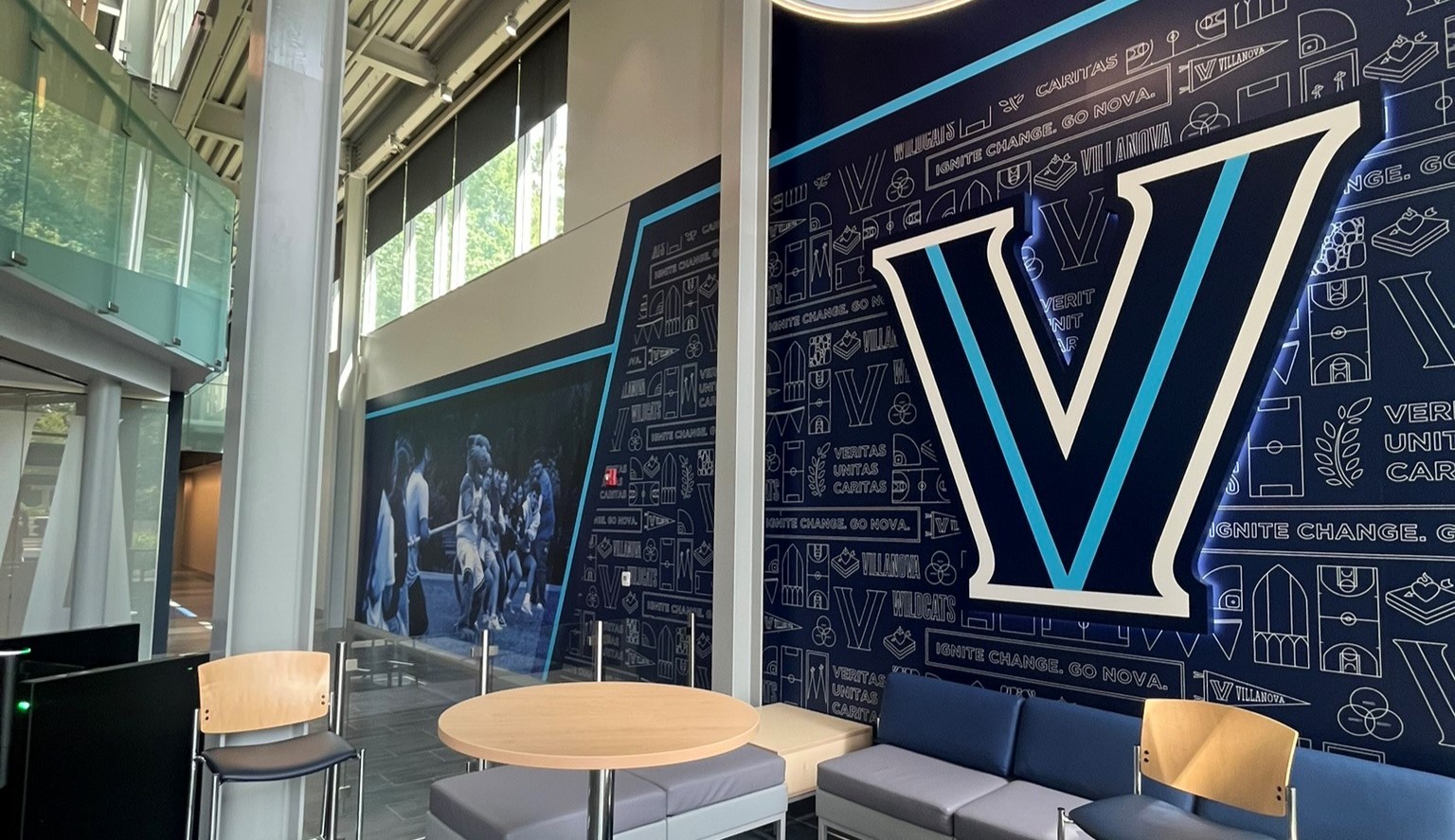
The reimagined spaces include a pair of social and recreational spaces open to all students: the Cascia Hall student center; and the Dixon Center and Nerney Pavilion, a 100,000 square-foot athletic and recreation center that includes project-based learning classrooms with sliding boards and video screens, all meant to replicate the academic experience in many buildings within the Villanova main campus on Lancaster Avenue.
Crews renovating the student center discovered treasures in the original architecture that will now become visible to the thousands of students who step inside the hall every year.
“There are all these treasures in this historic building,” Hoffman said. “As we were opening this up, we found things like the gargoyles. If you walk past the university shop there’s a turret that you can walk through.”
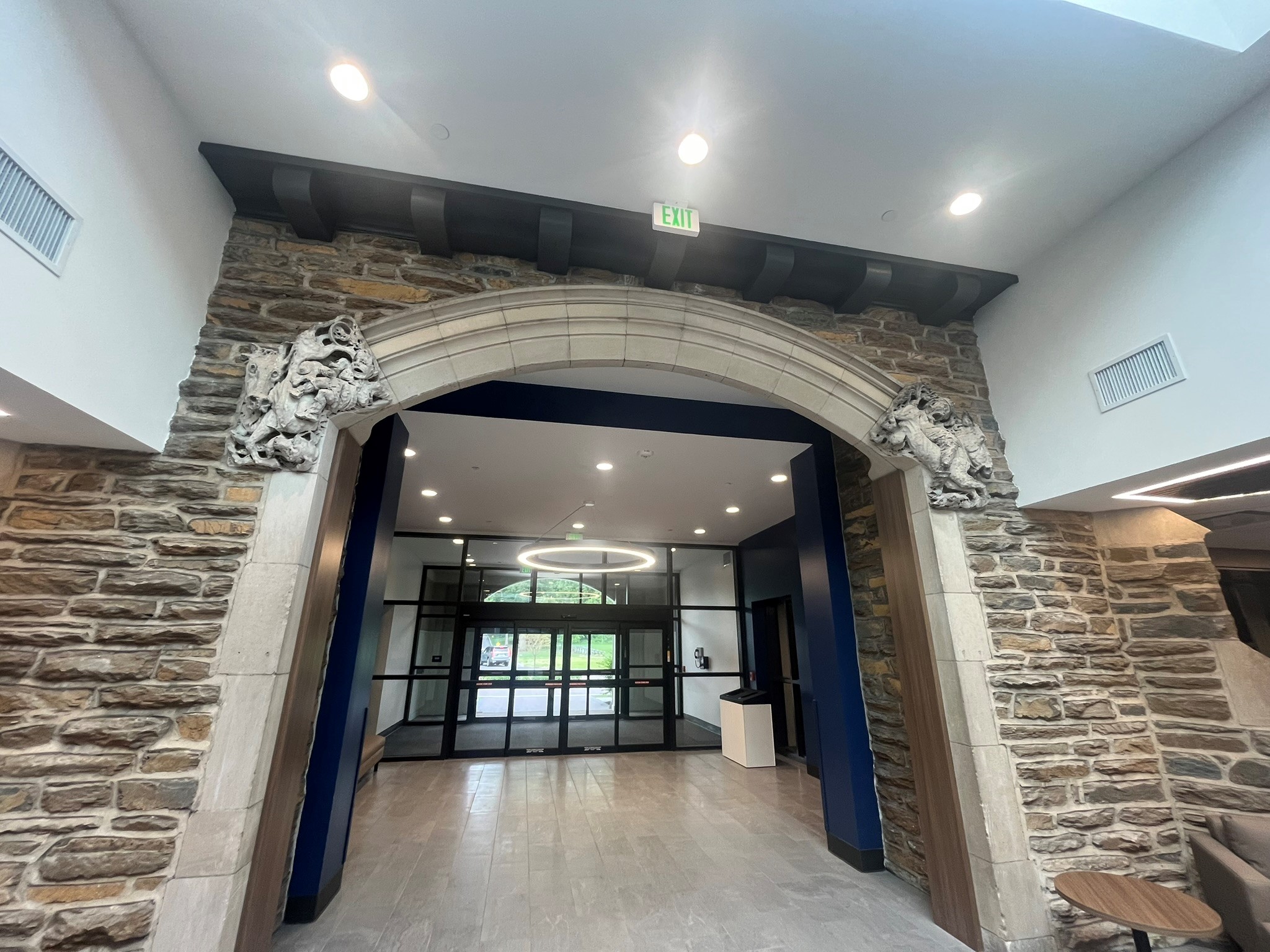
Historic gargoyles are seen above an arched walkway at Villanova University’s Cabrini Campus in Radnor. The architectural details were uncovered and preserved during renovations of the former Cabrini University campus. (Jay Sorgi)
Six residence halls and an apartment-living complex will open their doors Monday for incoming sophomores and other students, entering improved spaces that once housed Cabrini University students. A pair of residence halls will offer the names of Francesca and Xavier to tie to St. Frances Xavier Cabrini.
The academic spaces on the Cabrini Campus will continue four areas of current concentration at Villanova.
The Department of Psychological and Brain Sciences and Fitzpatrick College of Nursing will offer research and teaching spaces including simulation space for graduate nursing students.
The Department of Communication will offer new media labs, while the university’s Ethics Program will center itself on the Cabrini Campus, meaning nearly every student will spend some of their academic life there.
The Department of Education and Counseling, already long established at Villanova, will add an elementary educational component to honor Cabrini University’s legacy of molding educators for younger students.
“Part of our deal (with Cabrini University) was that we would have elementary education,” Father Donohue said. “Cabrini had a well-known elementary education program, and it was important for them that that continues, so Villanova took it on.”
Fewer than two miles separate the main campus on Lancaster Avenue and the new Cabrini Campus, so Villanova has established a shuttle system for students, faculty and staff.
They can depart from Cabrini on two specific shuttles directly to different parts of the campus on Lancaster Avenue. The route traveling from the Cabrini Campus to the western side of the Villanova campus connects people to the SEPTA Regional Rail station.
People can take timed shuttles starting at 6:30 a.m. on weekdays and 8 a.m. on weekends until 10:30 p.m., with on-demand shuttles late at night and during early mornings.
The shuttles will help deliver students to join their faith lives with residential and scholastic experiences, over the four or more years they spend at the Augustinian university that now brings on the charism of St. Frances Xavier Cabrini.
“They may come to worship here, they may come to work out here, or they may come for a distinctive dining experience here,” Hoffman said. “This was a great way to expand while preserving the integrity of the current campus.”
(Photo: Jay Sorgi)
PREVIOUS: Long History, Much Planning, Preceded Eucharistic Congress in Philadelphia
NEXT: Relics of St. Margaret Mary Alacoque Coming to Philadelphia Region
Share this story